Tuesday, January 26, 2016

I can't play "Mountain Guide" on the weekends

Denali wasn't fun. The Alaska Range is an incredibly beautiful place, the expedition was a highly valuable experience that gave me more confidence in my skills and made me a better mountaineer, and I'm glad I went -- I'd do it again if given the choice. But it wasn't especially fun.

I spent hours editing this and internally debating how much detail to go into when writing something that would be published online, because I genuinely don't want to say anything that's hurtful to anyone else who was involved in the expedition. I might not hold certain people in the highest regard, but they are individuals living their lives the way they want to. 

This was not a climbing expedition of friends (or even mountaineers of similar skill and experience levels who have mutually agreed to form a team to attempt a specific peak or route). Essentially, we were what the National Park Service would define as an illegal guiding operation. Two people gave James* money to guide them on a climb of Denali. I essentially acted as "assistant guide" -- I was another competent mountaineer on the rope, I helped our "client" out with a variety of things on the mountain, and I split the majority of camp chores with James. In return, he used some of the money he got from them to pay for my air taxi from Talkeetna to basecamp ($550) and ground transport from Anchorage to Talkeetna ($180).

I went into it knowing this. I knew we were probably going to generally move slower than I would have liked, and that I'd have to carry more than my share of the group gear. I didn't realize how much this, along with the guide-client dynamic, would wear on me -- physically and mentally -- after 15 days on the mountain.

Another thing that absolutely played into this was the cultural difference between the clients -- both of whom are Indian -- and myself. Cultural differences are a difficult subject to write about in the age of political correctness where anyone who disagrees with the writer is quick to label their writing as "racist" or "prejudiced." But they exist. There were situations where I thought the clients were being rude and entitled, but I'm willing to give them the benefit of the doubt and assume it was because of their own cultural norms, not because they are assholes.

At the same time, I know enough about the world to know that anyone from India who has travelled extensively and gone on numerous guided climbs of world-famous mountains is very wealthy. 

When I first met Diane* and Andrew* in Anchorage, they reminded me of the 40-somethings commonly seen in the Seattle REI preparing for their mid-life-crisis ascent of Mt. Rainier, sporting thousands of dollars worth of brand new mountaineering gear without the slightest idea of how to use it.

"I'm going to get frustrated on this trip," James told me as we were pre-cooking some of our expedition food in the hostel kitchen. At that point, I was trying to keep an open mind.

Less than an hour before we were supposed to leave Talkeetna and fly into base camp, Andrew was forced to leave the expedition due to a family emergency. I felt bad for him -- flying halfway around the world to climb a mountain and then not being able to do it because of a completely unforeseen circumstance would suck -- but I didn't really know him. And I couldn't help but think that this would make things easier and safer for the rest of us. Two experienced mountaineers on a rope with one inexperienced person is a manageable situation.

On July 1, we decided to take some gear up to the top of the headwall (~16,000') to cache to make our move up to Camp 4 (17,200') easier. After an hour of slowly slogging up to the base of the fixed lines, the weather was deteriorating -- it was beginning to snow harder and the wind was picking up. James asked Diane if she wanted to stay there while he and I took the gear up. She was obviously tired and having a difficult time with the climbing (I'm not sure whether that was because of the cold, altitude, or her fitness. It doesn't really matter), but still protested that she wanted to continue up with us.

"I really don't think that's a good idea," I objected. My self-preservation instincts were kicking in at this point -- we had to get up, drop our cache, and get down, fast. Diane was just going to slow us down. In the end, she decided to stay. James built her an anchor, and he and I continued on. "Sorry for being a dick, but we need to move," I told James as he and I prepared to ascend the fixed lines.

"Yeah, you were kind of being a dick," he replied. "Remember, she paid to be here."

If she had gone with us, things might have gone badly. At the top of the headwall, we were getting slammed with 50mph gusts. The task of digging a cache was hard enough without having to look after someone who didn't know what they were doing, and as we descended, fractures were forming in the snow off to the right (climber's right). It might have been a dick move to tell her to stay, but in retrospect, it was necessary. I'd do it again.

A guide's first responsibility should be to keep herself and her clients alive, even if that means a few bruised egos.

Running into bad and stressful situations is inevitable on mountaineering trips. There's always something that doesn't go the way it's supposed to. It's almost like a twisted family vacation, only with dad getting pissed off at mom because there's always too much slack in the rope, the teenager complaining because the group is taking a rest day when he/she wants to keep going, mom can't figure out how to get her inReach to work properly so she keeps asking the teenager what's wrong with it, and instead of a toddler in a baby backpack, there's just a big plastic poop-can (aka CMC) that people take turns carrying.

Thursday, September 17, 2015

Photo TR: Black Peak

Date Climbed: September 12, 2015
RT Stats: 14 miles, 4550 ft vertical gain, 11 hours (5 hours trailhead to summit; 45 minutes for route finding)

Early morning mist

Frost at Heather Pass

Colors starting to change at Lewis Lake
Looking back at Lewis Lake from just below Wing Lake

Clouds clearing ... kinda ... sorta ... not really 

The peak was socked in for most of the approach. Looking up toward the col.

Looking back during a moment of clarity

The final scramble up to the col, just right of the snow

I got off-route and climbed up some slightly sketchy 4th class rock here.
"This is really going to suck coming down," is probably not the best thought to be having repeatedly when solo and climbing on shitty, wet rock.

First dusting of snow in the North Cascades

Looking back at the route up from the col from just below the summit.

Lewis Lake and Wing Lake from the summit

Tuesday, August 25, 2015

Undrinking the Paleo and CrossFit Koolaid

I wanted the Paleo Diet to work. From a perspective based on evolutionary science, it makes sense. As a solution to a lot of the endocrine disorders that have run rampant in American society due to our overconsumption of refined sugar and processed vegetable oils combined with our generally sedentary lifestyles, the Paleo Diet makes sense. I wanted it to be the solution -- the ticket to lower levels of body fat and improved athletic performance.

But the king of scientific data -- empirical observations -- suggests otherwise. For the past two years, I've pretty much eaten whatever I wanted at the time and haven't followed any specific dietary regime, and I'm leaner and fitter than I've ever been. I'm 128 lbs and 18.5% body fat -- down from around 22-24% when I was eating Paleo. I can do five pull-ups, hike 3500 vertical feet per hour (at sea level), deadlift 160 lbs, and military press 75 lbs.

I cut out 90% of grains and refined sugars from my diet for the better part of three and a half years (February 2009 through December 2012). Throughout that entire time period, the changes in my fitness levels and body composition came almost exclusively from physical activity. In general, I was hovering around 23% body fat and weighed between 135 and 145 lbs. I slimmed down to about 130 during Field Camp (for those non-geologists, Field Camp basically involves spending a month hiking around and making geologic maps of an area), and then again during/after my expedition to Aconcagua. Overall, though, nothing changed dramatically.

After I got back from Aconcagua, graduate school happened and I pretty much just ate whatever was convenient. I didn't regain much of the weight I lost on that trip -- probably because I forced myself to work out for at least an hour, five days a week, to deal with the stress of writing my MS thesis. 

I reached an all-time low of 127 lbs in the summer of 2014 (and I've been within 5 lbs of that ever since), and my speed in the mountains improved dramatically. 

I don't know what the missing puzzle piece is, or if it was just one thing. But I do know that my endurance levels have skyrocketed. I don't struggle to keep up with people in the mountains anymore -- I'm kicking everyone else's ass. 

What I'm doing now works, so I'm going to keep doing it.

Empirically, the two things that seem to be the key to getting leaner, and doing it quickly are:

1) Physical Activity. This is likely equally physical and mental -- if I've had a bad day at work, hitting the stair master or throwing some weights around in the gym clears my head. Reduced stress leads to reduced levels of cortisol and... you get the picture.

2) Cutting back on the booze. I love beer, and I love having friends who I actually want to go grab a beer with. I love experimenting with cocktail recipes, making liquor infusions, and trying different whiskies. Craft breweries and craft distilleries are a part of Seattle's culture. But beer and liquor have a lot of calories, and studies have shown that giving up booze for a month leads to a dramatic reduction in liver fat, which, in turn, helps the body metabolize nutrients more efficiently. Overall, as cliche as it sounds, moderation is the key. 


Totally non-paleo post-workout meal: angel hair pasta with spinach, mushrooms,
grape tomatoes, and chicken sautéed in pesto sauce and topped with parmesan cheese.

I'm not sure what was inherently appealing about the Paleo Diet, aside from the link to evolutionary science. Perhaps it was the fact that it refuted the mainstream and pseudo-scientific claim that a vegetarian diet was inherently healthier than one that included meat. Perhaps is was the fact that it seemed to be adopted by athletes like powerlifters and MMA fighters, whereas the low-fat/vegetarian diets seemed to be more commonly associated with the women in color-coordinated workout outfits who read Shape magazine on the elliptical and then wave around pink 5lb dumbbells randomly and call that a workout.

As for CrossFit -- well, I started doing CrossFit because I was eating Paleo. They don't call it a "lifestyle" for nothing -- but that's true of any sport. If you want to excel at what you do -- whether that's cycling, olympic weightlifting, martial arts, hockey, or mountaineering -- you have to tweak your training regimen for your specific goals, and you have to have a diet that fits that training regimen.

While I don't follow the Paleo Diet anymore, or do CrossFit, both of those things were still beneficial for me. 
1. I think certain endocrine functions were probably improved by the extended periods of time I spent eating less than 100g of carbohydrates a day, and by cutting sugar out.
2. I have a fat-adapted metabolism. Even though carbohydrates provide a lot of quick energy and are more easily digested at high-altitude, being able to use fat as a fuel is crucial in any endurance sport, especially mountaineering.
3. I understand the importance of good form when lifting.
4. I spend more time in the gym doing dynamic lifts instead of isolation exercises. Looking muscular is great and all, but being able to back up that look with actual abilities is better.

The Paleo Diet works for a lot of people -- I'm not denying that. I even have family members who have halted and reversed pre-diabetic endocrine conditions by eating low-carb, mostly Paleo diets. It just doesn't work for me. As a scientist, the only way I can figure out what works is by experimenting. 

Wednesday, May 6, 2015

Fortune Favors The Bold

Every climber's path passes a few milestones as they grow and evolve as people with a passion for rugged, wild places. Whether that journey takes them from an icy bunny hill to glaciers and steep couloirs, from their first "14er" to one of the Seven Summits, from the climbing gym to Fitz Roy, or becomes a journey of passing that passion on to their kids, these milestones are often a chance to reflect on who we have become -- about how climbing has changed our lives and made us who we are.

I don't remember where exactly I first heard the phrase "Fortune Favors The Bold" -- a proverb that traces its origins back to Virgil and The Aeneid -- but it resonated with me. It's what I try to tell myself every time I do something that scares me. And I haven't regretted any of the things that I've done that scared me. Usually, I was glad I took the chance and did them. 

Fortune Peak, a relatively obscure mountain in the Teanaway Forest of central Washington, seemed a good choice for my 100th summit. Not that climbing 100 unique mountains makes me any different than climbing 99 mountains, or 101 mountains, but to me it was symbolic of how far I've come as a climber over the past 8 years. Either way, I wanted my 100th summit to be something special. According to some recent beta, Fortune Peak was skiable, and easily doable in a day trip from Seattle, so I went for it.

I left Seattle around 07:00, and, after a momentary traffic jam in the omni-construction-zone of I-90, I cruised over Snoqualmie Pass to Cle Elum, then up about 20 miles of dirt roads (easily navigable thanks to Google Earth) to the trailhead. I chatted with some climbers heading for Mt. Stuart and started up the trail to Ingalls Pass about 10am.

After about 40 minutes of hiking, the trail disappeared under the snow, and I continued cross-country up through the trees. I met a woman hiking with her boyfriend (both probably in their 40's) and exchanged friendly "hello's," which somehow led to one of us making a comment about being Colorado, which led her to persist in telling me her life story for the next hour or so as we hiked across the snowfield.

The Teanaway Wilderness

They split off towards Ingalls Pass, and I cut across some rock bands leading in the direction of Fortune Peak. The terrain was roughly split between rock and snow, so I didn't bother to start skinning until I saw a relatively long, consistent snow slope leading up towards the ridge.

I put on my skis/board (I'm really curious as to the proper term to use when in touring mode) and started up the snow slope. I was instantly in heaven. Aside from the fact that I was no longer postholing with a snowboard on my back, there's something incredibly calming about skinning up a slope. I bought my splitboard, ironically, the year that winter never came (screw you, House Stark), but after my first day out -- New Years Day in Mount Rainier National Park -- I was hooked, and knew that snowboard touring would become a big part of my mountaineering life.


Fortune Peak in the distance on the left from just below the ridge

After about half an hour or so, I came to a point above a small bowl and just below the rocky spine of the east ridge. This part was mostly enjoyable class 2 scrambling, with maybe a couple of class 3 moves. Even though I wished I wasn't carrying my board, it was still fun.

Above the rocky ridge, I put my skis/board back on and skinned up the final 300-400 vertical feet to the summit. I reached the summit just before 14:00. I dug the beer out of my pack that I'd brought to celebrate and shoved it in the snow while I took some photos and transitioned.

It was a perfect bluebird day. A gentle breeze sent chills down my sweat-soaked back as I sat on my pack and enjoyed my celebratory Belgian Pale Ale and the views of the jagged black peaks adorned with sporadically crisscrossing lines of white-blue snow. Mount Rainier stood proudly in the distance, thinly veiled behind the faint afternoon haze.


Summit beer with South Ingalls (left) and Mt. Stuart (right) in the background

The descent started easily enough. I followed the mellow slope down the ridge, skirted the snow past the rocky outcrops on the rim of the bowl, and then embarked on about two minutes of pure transcendent ecstasy, carving down the soft snow. The slope mellowed out as I reached the bottom of the south face, and I rode it as long as I could, dodging trees and shrubs poking out. 

I still had a ways to bushwhack out through the forest, vaguely aiming for the Esmeralda Trail. I wasn't exactly sure where it was, as I'd never been to this area before, but I was confident I could get back to the trailhead. Still riding that euphoric high from the awesome turns I'd just made, the bushwacking didn't bother me.

One of the many streams in the Esmerelda Basin drainage network

Four years ago, the idea of being in the wilderness without an obvious trail or route description to follow would have been intimidating. I'm not sure what I was afraid of. Maybe the overly-cautious attitude prevalent on 14ers.com got to me. But after hiking all over the mountains surrounding the Gunnison Valley in Field Camp and a summer of trudging through the dense Northwestern forests fighting wildfires, I'm pretty confident in my ability to navigate the backcountry and get where I need to be.

And, just like that, I ran right into the Esmerelda trail about 1/4 of a mile from the parking lot.

The icing on the cake of the snowboard tour to the summit of my 100th mountain waited for me at my car. After the sweet relief of taking off my pack for the last time and changing from soft-shell pants and snowboard boots into shorts and Chacos, just as I was ready to head out, I found a note left on my car.


Spoiler alert: I didn't call the guy. Not that I wouldn't have, but at that point I just wanted to head back to Seattle and have a nice quiet evening. It made me laugh, and I really did think about it for a second. I get it. Guys think solo female backcountry snowboarders are hot.

This isn't the first time that I've been hit on (kind of?) for being a woman who doesn't give a fuck, who just does what she wants to do and lives how she wants to live. But I try not to think too much about it. I just live my life. I don't have many regrets.

View from the summit of Fortune Peak

I don't believe in fate. But I think that you have to be willing to take risks, to venture into the unknown, to be able to find whatever it is that you want in life. Fortune favors the bold. 

Thursday, November 6, 2014

Travel is Not a Cure for Depression

In the mountains, being in a clear state of mind can mean the difference between life and death. When it comes to travel -- the lines are a little more blurry, more complex -- but bottom line is that the level of enjoyment from travel often comes down to whatever state of mind the traveler is in. 


Another sunset from 37,000 ft.

Being in a good place in your head is the first step towards having a fulfilling experience in any place on earth.

I wasn't in a good place when I went to Peru last summer. I was working what was supposed to be a good job as a mudlogger -- a field geologist on an oil rig -- in the Powder River Basin of eastern Wyoming. On the surface, it seemed like a great way to start a career -- it was well-paying, offered a flexible schedule with blocks of time off rather than the standard 8-to-5 routine, and kept me reasonably close to the mountains. In reality, it was a never-ending saga of being trapped for weeks on end in a cramped trailer with at least five OSHA violations in the immediate vicinity, working 12-hour shifts with no predictable time off, and slowly accepting the reality that the optimistic promise of a 2 weeks on/2 weeks off schedule was never going to happen. I was going to be stuck out there as long as I held that job.


Pretty sure storing flammable liquids and flammable compressed 
gasses right next to each other is a really bad idea.

This was the first time in my adult life that I truly felt like I had no freedom. Every other job that I've had that I didn't like had an end in sight -- I would graduate from my MS program, and fire season would end with the first big rainstorm. I could have walked away at any time, but I kept telling myself that if I stuck it out just a little bit longer, I'd leave with that much more money. The country was in an oil boom and making $300/day without having to pay rent was a hard situation to walk away from. 

I booked a plane ticket for a two-week trip to Peru in mid-July with the hopes of climbing some of the easier summits -- Pisco, Yanapaccha, Tocllaraju -- of the Cordillera Blanca. But my attempts were failed before they started. The complete and utter lack of freedom that had plagued me for the past six months left me in a state of anxiety, of feeling internal pressure to do everything right on this trip because I knew it would be a while before I had that kind of freedom again. And I ended up doing most things wrong.

A glacial river flowing out from the Ishinca Valley

Feeling trapped for so long heightened my sense of awareness to situations where other people were taking the lead on trip decisions. When the climber who I'd met up with via summitpost kept trying to make choices about what we'd climb and when we'd climb it, I took it far too personally, and from there it was a downward spiral. We were still a poorly matched team, but this made everything worse.

I wanted -- needed -- to do things my way. After my partner and I split up in the Quebrada Ishinca, I might not get the mountain I wanted, but at least I could do the trip how I wanted. I befriended some Canadian climbers and my two summit attempts on lower, safer peaks went well.

Tocllaraju from the slopes of Ishinca

When I went back to Huaraz, I wasn't sure what I should be doing. For one, I had a minor cold, and my lips were terribly sunburned, so I needed a couple days to recover. I stayed in the hostel for a couple days, rested, and explored Huaraz. I befriended a few other travelers, explored some ruins, and did a day hike to Laguna 69 below the rocky, glaciated slopes of Pisco. In the end, I spent so much time trying to figure out what I should do with the rest of my time in Peru that I never did anything overly interesting.

The brilliant turquoise waters of Laguna 69

And the whole time, I was dreading going back to the confines of that cold, dingy trailer on a grimy well pad in eastern Wyoming and long, lonely nights spent reading articles on Matador Network and dreaming about the day when I could finally be done forever but with no end in sight.

I took an overnight bus to Lima, intending to spend a few days exploring the tourist attractions there. I visited the catacombs at the Church of San Francisco, went to the ChocoMuseo, bought some gifts for people back home at the Indian markets, and did a really amazing (and delicious) food tour of the city. In a way, I suppose a part of me felt so removed and disconnected from whatever it means to be a normal human that I wanted to do things that normal humans do when they travel. Go to museums and restaurants. Walk out to the beach.


A church in the Barranco district of Lima

Peru wasn't the best travel experience I've ever had. It's a beautiful country, and I'll go back someday. And when I do, I'll be in the right place, for the right reasons.

Tuesday, June 3, 2014

"Safe" Doesn't Have To Suck

Like most mountaineers, I have a bit of an ego. Like most people with GoPro's, I want to take video of things worth taking video of. But at age 25, I'm old enough to realize the absolute  stupidity of making a potentially dangerous decision solely for the sake of my ego and some sweet footage -- especially when there's an alternative that's much safer. 

I've been lucky in the mountains before. I know that there will be more "oh shit" moments to come. And I know that the more I play the odds, the more likely it becomes that the odds will win at some point.

It was May 29, 2014, and I wanted to climb a 14er and snowboard down it. I recently bought a GoPro and had been itching to try it out, and I wanted a good training climb for my upcoming trip to the Cordillera Blanca. The intent was to climb and descend the Cristo Couloir on Quandary Peak. With a maximum steepness of about 38 degrees, this would be steep enough to be a little scary to snowboard, and about perfect for a preparatory climb.

Temperatures hadn't dipped below freezing for several days prior, and there was plenty of evidence of recent wet-slab activity on the surrounding peaks staring me in the face. It was close to 08:00 when I arrived at the trailhead, which might be just enough time to be off the mountain by 11:30 (the couloir is south-facing).

But I was solo, and sunhit times don't matter when it comes to wet slabs. Not to mention I'd be in a terrain trap the entire way up and down.

So I drove back to the McCullough Gulch trailhead, hiked up the muddy trail and postholed through a really awful section of soft snow around treeline, and hiked the East Ridge to the summit. Not even remotely a special climb or ski/board descent -- it's about as steep as a blue trail at a ski resort.


But it was still fun, and I accomplished both my goals.

About 1000' below the summit, I met another climber on AT gear who shared the opinion that Cristo wasn't a very smart place to be that day. We chatted for the rest of the hike up, and he gave me some tips on using the GoPro.


After maybe 2000' of riding soft, slushy snow, we had posthole-hell to wade through, and then had to find our way through the forest back to the trailhead. There's some old, overgrown mining roads, and lots of private land surrounding the base of the mountain, but it wasn't too difficult.

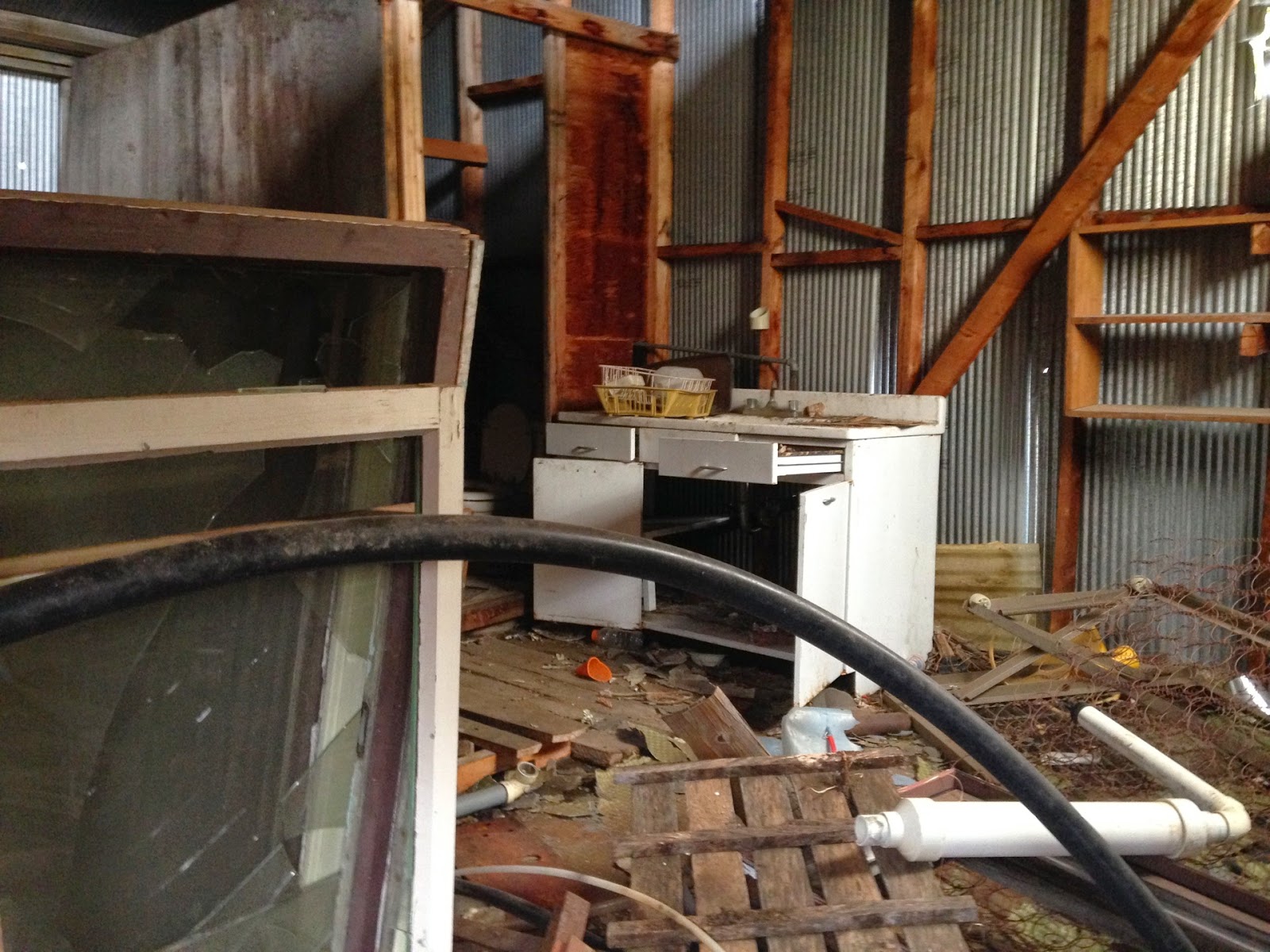
We stumbled upon an old tin shack with piles of broken windows and retro furniture inside. This has nothing to do with snowboarding, but it was an interesting find.


Everything about that day was great (except for the part where I lost my sunglasses and got snowblindness, but that didn't kick in until the drive home). The hike, the descent, post-climb happy hour at Mi Casa in Breckenridge. 

It was a safe choice, and it was still an adventure.


Thursday, March 20, 2014

Jackson Hole, Wyoming: The Dichotomy of a Ski Town

I wasn't entirely sure what to expect when I arrived in Jackson after a six hour drive that took me over Togwotee Pass in a snowstorm and checked into a room at the Anvil Motel. I'd read stories, seen movies, and heard my friends talk about how amazing the terrain was, so I was excited for that. It was a place that was on my "Snowboard Bucket List," and it seemed as good a time as any -- it was mid-February, and I knew that winter would be over before I knew it.

I ventured a couple blocks into town to get some food and beer from the Silver Dollar Bar & Grill. They had plenty of beer from the Snake River Brewery on tap, and the plate of nachos I ordered seemed directly proportional to Rendezvous Mountain itself. Casually observing the atmosphere, I noted that I had never seen so many expertly-crafted cowboy hats and boots with hardly a speck of dirt on them in any other town in Wyoming. 

Nachos loaded with beef, cheese, jalapenos, and beans at the Silver Dollar Bar

A guy I met in firefighter training who had spent the previous winter ski-bumming in Jackson told me that it was one of the more ostentatious ski towns -- probably on par with Aspen, Breckenridge, and Telluride. But I had to experience it for myself. 

Not wanting to spend the rest of the night hanging out in my motel room, I stopped into the Million Dollar Cowboy Bar, where patrons who fly in from Texas and the East Coast probably run up million-dollar tabs. I struck up a conversation with a couple of snowmobilers who had come up from Denver for the weekend, and what started as "a beer and a shot of bourbon" turned into "several beers and several shots of bourbon."

The Million Dollar Cowboy Bar

A big mug of coffee and about 4 ibuprofen were enough to get me on the road to the ski area the next morning. The lift tickets at Jackson Hole run for $117 a day -- about the cost of 2 days at several lesser-known ski areas that I frequent (that still have plenty of impressive terrain). 

The people at Jackson Hole inevitably fall into two categories -- the locals who are doing whatever it takes to live the Rocky Mountain Dream, and the rich tourists who fly in to spend a week a year at their time-share and spice up their life of business meetings and dinner parties with a taste of the West. But which "West," is that, exactly? The version that includes luxury hotels, 5-star restaurants, overpriced cowboy attire, $15 cocktails, shelves of t-shirts and accessories with the "Jackson Hole" logo plastered all over, little bottles of huckleberry syrup, and photo booths where the whole family can dress up like pioneers and get a sepia-toned memento of their time in a place that is made what it is only because of modern comforts like electricity, air travel, and mass media? Or the mountain wilderness that has seduced adventurers for the past two hundred years and came to be defined by rugged individualism, pragmatism, and the freedom to create one's own path?

And then there's this guy.

After waiting in line for about 45 minutes, I finally got on the tram. The views from the top are amazing, and Rendezvous Bowl is sick, but nothing is worth a 45 minute-wait, especially when you just paid $117 for 7 hours of skiing/riding.

These signs are all over, and there 
aren't actually cliffs below a lot of them

I spent the next two days exploring as much of the mountain as I could, and found it to be pretty unremarkable considering all the hype it gets. I'm sure it's sick on a powder day, but what ski area (in the West) isn't? Some of the traverses are pretty awful, but traverses are always awful on a snowboard, and most ski areas with any normal amount of acreage have at least a couple of painful traverses.

Terrain on the far left side of the ski area.
Totally not worth the traverse to get back.

As with any town, Jackson has a diverse selection of restaurants, from upscale sushi bars and steakhouses to lower-key diners and pizza parlors. In an effort to cultivate the "western" vibe of the town, many of them offer selections like bison, elk, and Snake River trout.

Admittedly, the bison sausage-and-mushroom 
pizza from Pizzeria Caldera was pretty good

Jackson itself is cute, cozy, and certainly not lacking in scenery -- but much like Breckenridge and Aspen, it doesn't feel genuine. Whether it's about money or being a part of America's ski culture, the kind of people who ski at Jackson Hole are the kind of people who expect other people to be impressed by the fact that they ski at Jackson Hole. It's not that they don't genuinely enjoy skiing -- it's that they care about prestige -- be it financial, social, or both.

It's not a real ski town if they don't have Christmas lights
on their trees for the entire duration of the ski season

Towards the end of my second day, I had the privilege of riding the gondola with a family that included a six-year-old girl with a smartphone and a couple of teen boys talking about the ski towns where their parents own property. And who knows, they may grow up to be great skiers and snowboarders. But they'll still care about the prestige of where they do whatever it is they do.

I stopped at the Roadhouse Brewery -- a little pub on WY-22 between Teton Village and Jackson -- for a couple pints and some $6 happy hour tacos. The porter, dubbed "Tower of the Castle," was brewed with sweet potatoes and served on nitro, and it was deliciously thick and smooth. The pale ale was nothing incredibly special, but the place had a refreshingly chilled-out vibe, and the patrons actually struck up conversations with one another.

Pizza ... French Fry ... Pizza ... French Fry

At some point that evening, I realized, I can have this. I make enough money that I could come here several times a year if I want to. I'm glad I went to Jackson Hole and experienced it for myself, but I'd rather go somewhere else -- somewhere that feels more like the West that I know and love. I'm not wired to love money.